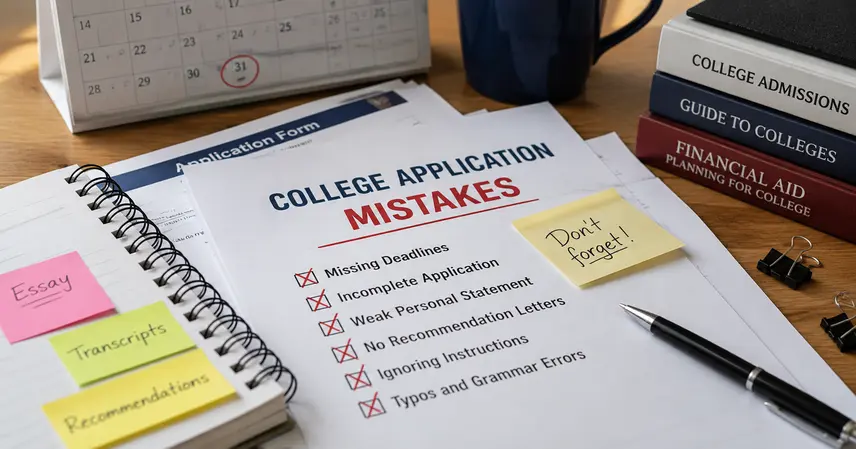
Applying to college in the United States is an exciting milestone, but it can also be a stressful process. Every year, thousands of qualified students miss valuable opportunities—not because they lack academic ability, but because they make avoidable mistakes during the application process.
College admissions officers review far more than grades and standardized test scores. They evaluate essays, recommendation letters, extracurricular activities, application accuracy, and whether an applicant has followed the required instructions. Even small errors can weaken an otherwise competitive application.
The good news is that most application mistakes can be prevented with careful planning and attention to detail. Understanding these common pitfalls will help you submit a stronger, more polished application that accurately represents your achievements and potential. Here are fourteen common college application mistakes that can cost you admission in the US.
1. Waiting Until the Last Minute to Apply
One of the biggest mistakes students make is postponing their applications until the deadline is only days—or even hours—away. Rushing through the application process often leads to incomplete forms, spelling mistakes, missing documents, and unnecessary stress. Technical issues can also occur when application portals receive heavy traffic close to deadlines.
Start preparing several months before your intended submission date. Creating a timeline for essays, recommendation letters, transcripts, and standardized test scores will help you stay organized and reduce pressure. Submitting early also gives you time to review every part of your application carefully.
2. Ignoring Application Instructions
Every college has its own application requirements. Some schools request supplemental essays, while others ask for portfolios, interviews, or additional documents. Ignoring these instructions can signal carelessness and may result in an incomplete application.
Before submitting anything, carefully read every requirement on the college’s admissions website.Create a checklist for each institution to ensure you’ve completed every required step.Paying attention to details demonstrates responsibility and professionalism.
3. Writing a Generic Personal Statement
Your personal statement is one of the few opportunities to let admissions officers understand who you are beyond grades and achievements. A common mistake is writing an essay that could apply to almost anyone. Generic essays often lack personality and fail to leave a lasting impression.
Instead, focus on a meaningful experience that shaped your character, influenced your academic interests, or inspired your future goals. Use specific examples and honest reflection to make your story memorable. Authenticity is far more powerful than trying to sound overly impressive.
4. Failing to Proofread Your Application
Grammar mistakes, spelling errors, and awkward sentences can distract admissions officers from your message.Although a few minor mistakes may not automatically lead to rejection, numerous errors can create the impression that you rushed your application.After completing your essays, review them several times.Reading your writing aloud often helps identify unclear wording and repetitive phrases.
You should also ask a trusted teacher, counselor, or mentor to review your application before submission.A polished application reflects strong communication skills and attention to detail.
5. Listing Activities Without Explaining Their Impact
Many applicants include long lists of extracurricular activities but spend very little time explaining what they actually learned. Admissions officers are interested in more than participation. They want to understand your contributions, leadership, personal growth, and commitment.
Instead of simply stating that you joined several clubs, describe how one or two meaningful experiences helped you develop valuable skills such as teamwork, problem-solving, communication, or leadership. Quality is often more impressive than quantity when describing extracurricular involve
6. Choosing Recommenders Who Don’t Know You Well
Letters of recommendation provide colleges with valuable insight into your character, academic abilities, and potential for success. A common mistake is asking someone with an impressive title but little knowledge of your work. Admissions officers prefer thoughtful, detailed recommendations from teachers, counselors, or mentors who can genuinely discuss your strengths.
Choose recommenders who have worked closely with you and can provide specific examples of your academic performance, leadership, work ethic, or personal growth.Be sure to ask them well in advance and provide any information they may need to write a strong recommendation.
7. Applying to Colleges Without Doing Enough Research
Some students apply to colleges simply because they are well-known or highly ranked. However, admissions officers often look for applicants who have a genuine interest in their institution. Understanding a college’s academic programs, campus culture, research opportunities, and student organizations can help you submit more personalized application materials.
Research each college before applying by exploring its website, attending virtual information sessions, and reviewing available academic resources. A well-informed applicant is more likely to demonstrate a strong fit for the institution.
8. Overlooking Optional Application Components
When an application labels an essay, interview, or portfolio as “optional,” many students assume it isn’t important. In reality, optional materials can strengthen your application by giving admissions officers additional insight into your abilities and interests.
If you have something meaningful to contribute, consider completing optional components whenever possible. An additional essay, creative portfolio, or interview may provide another opportunity to showcase your motivation, communication skills, and enthusiasm for the college.
9. Exaggerating Achievements or Experiences
Honesty is essential throughout the college application process. Some applicants believe exaggerating leadership roles, volunteer hours, awards, or extracurricular accomplishments will improve their chances of admission. However, inconsistent information or unrealistic claims can raise concerns about credibility.
Admissions officers value integrity and authenticity far more than inflated accomplishments. Present your experiences accurately, focus on what you genuinely achieved, and reflect on what you learned rather than trying to impress readers with exaggerated claims.
10. Neglecting Application Deadlines
Missing a deadline is one of the easiest mistakes to avoid, yet it continues to affect many applicants every year. Different colleges often have different deadlines for:
- Early Decision
- Early Action
- Regular Decision
- Scholarship applications
- Financial aid documents
- Housing applications
Create a calendar that includes every important deadline several months in advance. Set reminders on your phone or digital calendar to ensure you have enough time to gather documents, request transcripts, and complete every application requirement. Good organization can prevent unnecessary stress and help you submit your strongest possible application.
11. Submitting an Incomplete Application
Even highly qualified students can jeopardize their chances of admission by submitting an incomplete application. Missing transcripts, recommendation letters, standardized test scores (if required), application fees, or supplemental essays can delay the review process or result in an application being considered incomplete.
Before clicking the submit button, carefully review every section of your application. Most college application portals provide a checklist that allows you to verify whether all required materials have been received. Taking a few extra minutes to confirm everything is complete can prevent avoidable problems later.
12. Choosing Quantity Over Quality
Some students believe applying to as many colleges as possible will automatically increase their chances of acceptance. While it’s important to have a balanced college list, submitting rushed applications to dozens of schools often leads to lower-quality essays and careless mistakes.
Instead, focus on creating a thoughtful list of colleges that match your academic interests, career goals, financial situation, and personal preferences. A smaller number of well-prepared applications is often more effective than sending many generic ones.
13. Ignoring Financial Aid and Scholarship Deadlines
Receiving admission is only one part of the college journey. Paying for college is another major consideration.Many students concentrate solely on admission applications and forget that financial aid and scholarship deadlines are often separate.
Complete financial aid applications as early as possible, research institutional scholarships, and carefully monitor every funding deadline. Applying on time can significantly reduce your educational expenses and increase your access to grants, scholarships, and other forms of financial assistance.
14. Not Reviewing Your Entire Application Before Submission
After spending weeks or months preparing an application, it’s tempting to submit it immediately.However, taking one final review can make a significant difference.Read every essay one last time. Confirm that names, dates, and academic information are accurate. Ensure each document has been uploaded correctly and that every question has been answered completely.
If possible, ask a trusted teacher, counselor, or family member to review your application from a fresh perspective. They may notice mistakes or inconsistencies that you overlooked. A careful final review demonstrates professionalism, responsibility, and attention to detail.
Final Thoughts
Applying to college in the US is a process that requires careful preparation, organization, and attention to detail. While academic performance is important, admissions officers also evaluate the overall quality of your application, including your essays, recommendations, extracurricular involvement, and commitment to following instructions.
Fortunately, many of the most common application mistakes are entirely preventable. Starting early, researching each college thoroughly, writing authentic essays, meeting deadlines, and reviewing your materials carefully can significantly strengthen your application.
By avoiding these 14 common mistakes, you’ll be in a stronger position to submit a competitive application and improve your chances of earning admission to the college that best fits your academic and career goals.
Frequently Asked Questions
1. What is the most common college application mistake?
One of the most common mistakes is waiting until the last minute to complete and submit applications, which often leads to avoidable errors and missing documents.
2. Can grammar mistakes affect my college application?
Yes. A few minor errors may not determine the outcome, but frequent grammar and spelling mistakes can make your application appear rushed and less professional.
3. Should I apply to as many colleges as possible?
Not necessarily. It’s usually better to apply to a carefully selected list of colleges with strong, personalized applications than to submit many generic ones.
4. Is it acceptable to reuse the same personal statement for every college?
You can use a core essay, but you should customize it whenever a college requires supplemental essays or asks institution-specific questions.
5. Why are application deadlines so important?
Meeting deadlines ensures your application is reviewed on time and helps you remain eligible for scholarships, financial aid, and other admission opportunities.
6. Can extracurricular activities improve my chances of admission?
Yes. Meaningful involvement, leadership, community service, and long-term commitment can strengthen your application when presented effectively.
7. How can I make my college application stand out?
Start early, follow every instruction carefully, write authentic essays, highlight meaningful experiences, seek constructive feedback, and thoroughly review your application before submitting it.